The Rise and Remaking of the Prompt Engineer: Is It Still the Hottest Job in Tech?
The Narrative Hook: The Tale of Two Guitarists
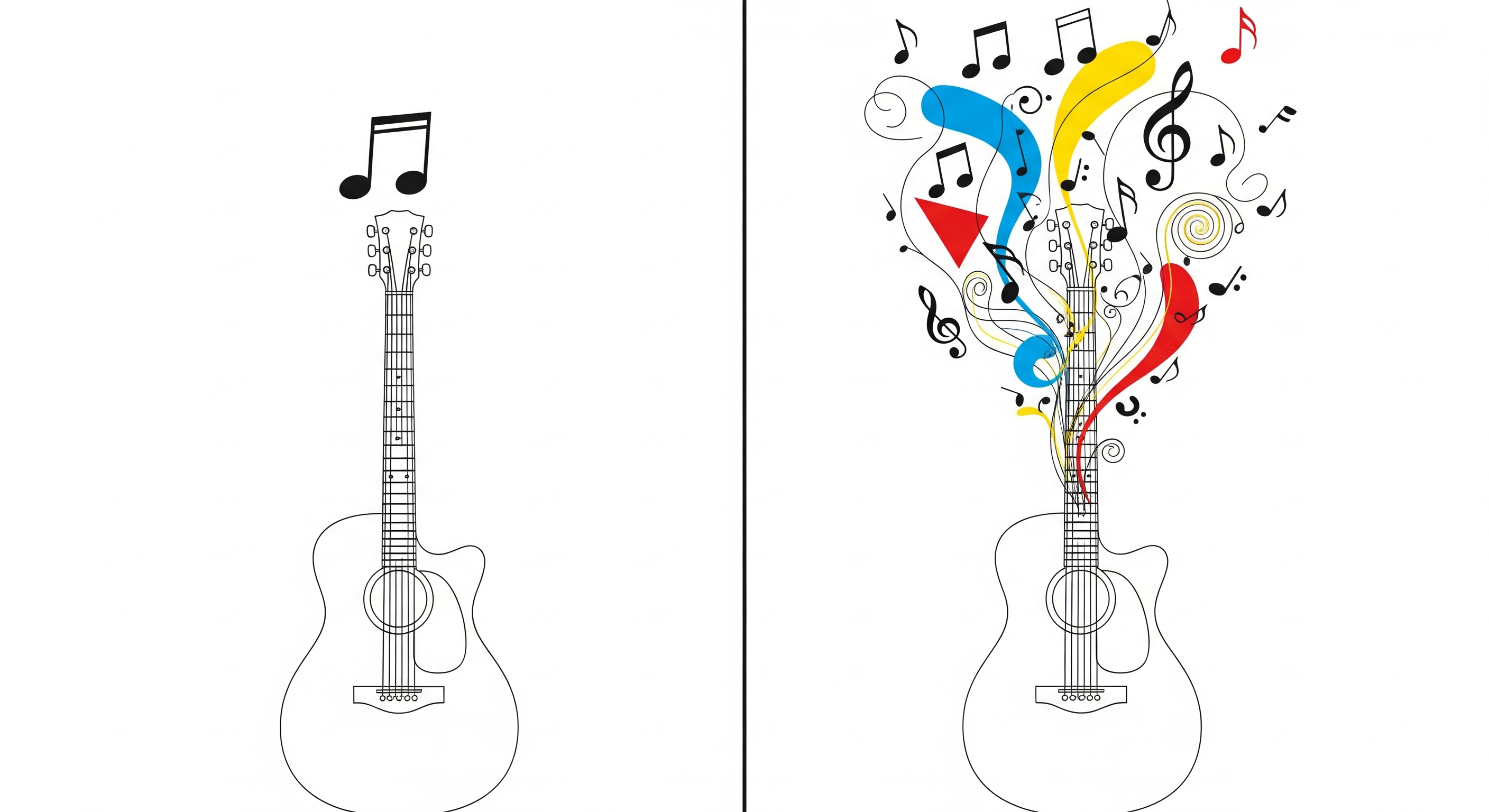
Picture a stage with a single, finely crafted acoustic guitar. The first person steps up, is handed the instrument, and manages to pluck out a sketchy, recognizable version of "Sweet Home Alabama." The chords are there, but the soul is missing. Then, that same guitar is passed to someone like Keith Richards. In his hands, it doesn't just play notes; it sings, weeps, and tells a story with every strum. The tool is identical, but the outcome is worlds apart. This is the perfect metaphor for interacting with today's powerful generative AI models. The technology is available to nearly everyone, but the quality of the output—whether a simple tune or a masterpiece—depends entirely on the skill of the user. This raises a crucial question in the new world of artificial intelligence: what does it take to become a master of this new instrument, and is being a "prompt engineer" a real, lasting career or just a fleeting moment in the tech spotlight?
The Core Question: So, Is Prompt Engineering an Actual Job?
The short answer is: Yes, but it's evolving. The initial explosion of generative AI created a frantic demand for specialists—"prompt engineers"—who could coax brilliant results from these new digital minds, with some job postings offering salaries upwards of $400,000. These roles were real, and the need was genuine. However, as AI models become more intuitive and the general workforce more AI-literate, the ground is already shifting. The standalone "Prompt Engineer" job title is beginning to recede as the role transforms from a niche specialty into a crucial skill embedded within a vast array of other professions, from marketing and design to software development and legal analysis.
To understand this evolution, we first need to grasp what it means to "speak" to an AI.
The Deep Dive: Unpacking the Art and Science of AI Conversation
A. What is Prompt Engineering? The Art of a Well-Crafted Question
At its heart, prompt engineering is about the quality of communication between a human and a machine. It is the practice that bridges the gap between our complex, nuanced intentions and an AI's literal, data-driven interpretation. Mastering this dialogue is the key to unlocking an artificial intelligence model's true potential, turning a clever tool into a powerful creative and analytical partner.
The Explanation Prompt engineering is best described as "the art and science of asking better questions to get better responses." It is the work of a "wordsmithing wizard" who understands that the quality of an AI's output is directly proportional to the quality of the input it receives. For example, asking an AI to Write a poem about generative AI will likely produce a solid, if generic, result. However, a skilled prompter provides rich context and constraints: Act as a celebrated poet. Write a three-stanza poem in the style of Robert Frost about the creative tension between human artists and generative AI, focusing on the themes of inspiration and obsolescence.
This detailed instruction gives the model far more information to work with, resulting in a tailored, higher-quality output. In this sense, a prompt engineer is very much like a software engineer; but instead of writing formal code, their programming language is natural human language, crafted with strategic precision. This principle—better input equals better output—is the foundation of the entire discipline.
The "Real World" Analogy: The Film Director
Think of a prompt engineer as a skilled film director. A director doesn't need to know how to build the camera, manufacture the film stock, or program the editing software. However, they possess an expert understanding of how to use those tools to achieve a specific vision. They know precisely how to frame a shot, guide an actor's performance, and sequence scenes to elicit a desired emotional response from the audience. In the same way, a prompt engineer guides the AI model. They don't build the algorithm, but they know exactly how to structure a "conversation" with it—providing the right context, setting the tone, and defining constraints—to produce a precise, creative, or analytical result that aligns perfectly with their goal.
The 'Zoom In': What Does a Prompt Engineer Actually Do?
A prompt engineer's work is incredibly varied, extending far beyond creative writing. Their skills are applied to a wide range of use cases, including:
- Factual Response: Crafting precise queries to extract accurate, verifiable information from an AI's vast knowledge base.
- Text Summarization & Extraction: Designing prompts that can read thousands of words of text and pull out the most critical information or provide a concise summary.
- Classification & Conversation: Building structured dialogues for customer service chatbots or writing prompts that sort unstructured data into useful categories.
- Creative Generation: Prompting for a vast array of creative content, from marketing copy and poems to photorealistic images, musical compositions, and video storyboards.
- Technical Generation: Writing highly specific prompts to generate functional software code, perform complex mathematical reasoning, or solve intricate logic problems.
This wide applicability is precisely what fueled the initial, intense excitement about prompt engineering in the job market.
B. The Gold Rush: The Initial Hype and High-Stakes Salaries
When generative AI tools like ChatGPT exploded into the public consciousness, they created an immediate and profound business challenge: how to tame these powerful, unpredictable new technologies. This sparked a digital "gold rush" for a new kind of talent—individuals who could act as interpreters between human goals and the AI's complex inner workings. Companies rushed to find experts who could ensure these tools produced reliable, valuable results, leading to the rapid emergence of the high-stakes prompt engineering role.
The Explanation The case for prompt engineering as a full-time, high-paying job was, for a time, undeniable. A quick search on sites like Indeed.com during this peak could bring back a few dozen results for "Prompt Engineer," with advertised salaries ranging from $70,000 to an astonishing $400,000 per year. The logic was simple: AI models are incredibly powerful, but that power is best harnessed by people with expertise in how they work.
Early-adopting companies understood this distinction clearly. They weren't just looking for generalists; they sought out professionals with domain-specific skills in fields like finance, healthcare, and law. These experts could craft prompts that not only understood the nuances of their industry but could also guide the AI to generate outputs compliant with complex regulations and standards, maximizing the technology's value while minimizing its risks.
The "Real World" Analogy: The Diplomatic Interpreter
A prompt engineer's value can be compared to that of a specialized diplomatic interpreter. In high-stakes international negotiations, a standard translator might convey the literal meaning of the words being spoken. However, an expert diplomatic interpreter does much more. They understand the cultural nuances, the political subtext, and the unspoken context behind the dialogue. They ensure the true intent is communicated, preventing catastrophic misunderstandings. Similarly, a prompt engineer acts as this expert interpreter between a human's intent and an AI's literal processing. They translate the nuance, context, and desired tone into a language the AI can understand, ensuring the final output is not just technically correct but strategically sound.
The 'Zoom In': Why Pay for a Translator?
So, why was this expertise so highly valued? Because generative AI models, for all their power, need guidance. They are trained on immense datasets but lack genuine understanding, common sense, or specific business context. This created a clear and valuable distinction between a casual user getting amusing or generic results and a professional who could consistently extract reliable, high-quality, and creative outputs. For companies investing millions in AI, the ability to generate predictable, on-brand, and accurate results was not a luxury—it was a necessity. Prompt engineers were the key to unlocking that reliability, making them indispensable during the initial wave of AI adoption.
This gold rush created a class of highly-paid specialists, but a quiet, powerful force was already at work, threatening to turn this exclusive expertise into a common commodity.
C. The Great Democratization: A Skill for Everyone, a Job for Few?
As is the case with many groundbreaking technologies, what begins as a highly specialized and exclusive role often evolves into a more broadly distributed and essential skill. From the early "webmaster" to the modern social media manager, technology has a way of democratizing expertise. Prompt engineering is now following this classic pattern, shifting from a job for a few to a fundamental skill for many.
The Explanation The argument that the standalone "Prompt Engineer" job is declining is compelling and backed by several key trends.
- AI is getting smarter. A common refrain in the AI world is, "Today is the worst it will ever be." Models are rapidly improving their ability to understand ambiguous or incomplete requests. Furthermore, experimental tools like AutoGPT are already exploring the possibility of AI systems that can prompt themselves, breaking down a large goal into smaller steps without constant human input.
- It's becoming the next "Googling." A generation ago, the ability to use a search engine effectively was a distinct skill. Today, it's a baseline competency expected of almost any professional. Many experts believe prompt engineering is on the same trajectory, becoming a universal skill that most knowledge workers will be expected to possess.
- Companies are upskilling, not just hiring. Rather than recruiting expensive external specialists, many organizations are choosing to upskill their existing workforce. Insurance giant Nationwide, for example, rolled out a company-wide AI training program and found prompt engineering to be one of its most popular courses. As their CTO, Jim Fowler, states, "we see this becoming a capability within a job title, not a job title to itself."
The "Real World" Analogy: The Webmaster
The evolution of prompt engineering closely mirrors the history of the "Webmaster" in the early days of the internet. In the 1990s, companies hired dedicated webmasters to build and manage their entire online presence—a highly specialized, technical role. Today, the "Webmaster" title is exceedingly rare. Instead, those responsibilities have been distributed among a host of other professionals: marketing specialists manage ad campaigns, content creators write blog posts, and social media managers handle community engagement. The skills of managing a web presence are more important than ever, but they have been integrated into other, more strategic roles.
The 'Zoom In': The Rise of New AI Roles
As the specific "Prompt Engineer" title fades, the core skill is being absorbed and expanded upon by a new wave of more strategic AI-focused roles. These emerging jobs aren't just alternatives; they represent an evolution, building on a prompt engineer's foundation to support the long-term infrastructure and performance of AI systems. The three roles seeing a significant surge in demand are:
- AI Trainer: This specialist possesses the skills of a prompt engineer but, as one source notes, "goes much further, acting as an analyzer, integrator, and optimizer." They instruct AI models on how to process information and engage in conversations, ensuring interactions are seamless, accurate, and aligned with company standards.
- AI Data Specialist: A crucial role focused on feeding AI models clean, relevant, and structured data. This is arguably the most critical factor in an AI's accuracy and reliability.
- AI Security Specialist: An expert tasked with protecting AI systems from emerging threats like data poisoning and prompt injection, which become more urgent as AI is embedded into core business workflows.
Despite the changing job market, the underlying skills that made prompt engineers so valuable in the first place are not disappearing. In fact, they are becoming more essential than ever.
D. The Prompt Engineer's Toolkit: The Essential Skills for AI Mastery
Whether it's for a dedicated job or a required competency within another role, excellence in AI communication demands a specific blend of creative, linguistic, and logical skills. This toolkit is less about having a single, specific degree and more about cultivating a mindset that can effectively bridge the worlds of human language and machine logic.
The Explanation The ideal prompt engineer possesses a unique combination of talents. The foundation is built not on code, but on communication. Strong writing skills are paramount, as prompting is fundamentally an exercise in language. This is a field where degrees in English, literature, or philosophy can provide a significant advantage. These disciplines train the mind to understand nuance, context, and subtext—the very skills required of the expert "diplomatic interpreter" needed to translate human intent into machine-readable instruction. Beyond writing, the role requires sharp logical thinking to deconstruct problems, coupled with the creativity and curiosity to explore unconventional solutions.
While not always a strict requirement, technical skills serve as a powerful career accelerator. Some job postings explicitly state that coding is not needed, but an understanding of programming logic is always a bonus. The most common languages requested are Python and R, with some roles also requiring SQL for data interaction. Increasingly, familiarity with developer frameworks like LangChain—which allows for the creation of complex, multi-step AI applications—is becoming a highly sought-after skill.
The "Real World" Analogy: The Master Chef
A master prompt engineer is like a master chef. A chef needs more than just a recipe (the prompt). They require an intuitive understanding of how different ingredients interact (how various AI models behave), the creativity to experiment with new combinations, the precision to execute a technique flawlessly, and the communication skills to run a kitchen team (collaborating with developers, marketers, and other professionals). The final dish—a perfect AI-generated output—is the result of this holistic skill set. It comes not from just following instructions, but from a deep, practiced understanding of the entire creative process.
The 'Zoom In': The Skill Stack for Success
The skills needed for AI mastery can be broken down into core competencies and career accelerators.
- Core Competencies (The Must-Haves):
- Exceptional Language Skills: A deep understanding of nuance, tone, phrasing, and syntax to guide the AI with precision.
- Logical and Creative Thinking: The ability to systematically break down a complex request and imagine innovative ways to phrase it for the AI.
- Pattern Recognition: An intuitive sense for identifying how small changes in wording, structure, or context dramatically affect AI outputs.
- Hands-on Experience: Practical, in-depth familiarity with a variety of AI models, including text generators (ChatGPT, Bard), image creators (DALL-E 2, Midjourney), and more.
- Career Accelerators (The Nice-to-Haves):
- Coding Skills: Proficiency in Python, R, and frameworks like LangChain that allow for programmatic control and integration of AI.
- Domain Specialization: Deep expertise in a specific field such as marketing, finance, law, or healthcare, which allows for the crafting of context-rich prompts.
- Formal Education: While a computer science degree is common, a background in the humanities can be equally valuable due to the emphasis on language and critical thinking.
This toolkit is not static. As the technology itself evolves, the skills required to master it will need to expand right along with it.
E. The Next Frontier: Multimodal, Ethical, and Adaptive Prompting
The field of prompt engineering is far from static. Looking toward 2026 and beyond, the practice is evolving into something more complex, more automated, and more deeply intertwined with human values than ever before. The simple text prompt of today is just the beginning of a much richer and more collaborative dialogue between humans and machines.
The Explanation Several emerging trends are set to redefine the future of prompt engineering.
- Multimodal Prompting: The conversation is expanding beyond words. With the rise of models that can understand and generate text, images, audio, and video, prompting is becoming a multi-sensory skill. The prompt engineer of the future won't just write text; they will design "hybrid cues," combining an image with a verbal command or an audio clip with a descriptive paragraph to guide more sophisticated, context-aware AI models.
- Adaptive and Automated Prompting: The process is becoming more collaborative. Instead of a human doing all the work, future AI systems will actively help refine prompts. As experts predict, future models "might iterate on your query to get better results"—essentially generating or adjusting prompts on the fly based on context. This makes the interaction feel less like a command and more like a partnership.
- Ethical and Responsible Prompting: As AI's influence grows, so does the responsibility of those who guide it. A critical future trend is the focus on crafting prompts that ensure AI outputs are fair, safe, reliable, and inclusive. This involves using "guardrail" prompts to mitigate bias, steer the AI away from generating harmful content, and actively align its behavior with human values and societal norms. This transforms the role from a purely technical one to one with a profound ethical dimension.
The "Real World" Analogy: The Evolution of Search
The evolution of prompting is closely following the path of search engines. Early internet search was a simple matter of typing in a few keywords. Today, modern search is a rich, interactive experience. We use voice commands with our smart speakers, conduct visual searches with tools like Google Lens by pointing our phone cameras at objects, and receive results that are contextually aware of our location and past search history. Prompting is on a similar trajectory, moving from simple text commands toward a multi-sensory, adaptive, and deeply personalized interaction with intelligence itself.
The 'Zoom In': The New Ecosystem of Tools
This future is being built with a new generation of tools designed to make prompt engineering more powerful and accessible. These platforms fall into two main categories:
| Tool Category | Examples | Purpose | | :--- | :--- | :--- | | Advanced Developer Frameworks | LangChain, PromptFlow | For programmatically chaining prompts and integrating AI into complex applications. | | No-Code/Low-Code Platforms | OpenAI Playground, AIPRM | For making prompt design accessible to non-technical users through visual interfaces and templates. |
These tools are turning what was once a manual art into a more structured engineering discipline, paving the way for even more sophisticated interactions.
The "Step-by-Step" Walkthrough: A Prompt in Action
To see the difference skilled prompting makes, let's imagine a tale of two marketers tasked with launching a social media campaign for a new eco-friendly coffee brand.
Step 1: The Novice's Approach
The first marketer, new to generative AI, opens a chatbot and types in a simple, direct prompt: Write a social media post about our new coffee.
The AI produces a perfectly adequate but utterly generic response: "Try our new coffee! It's delicious and made from the finest beans. Buy now!" The output is bland, lacks brand voice, and fails to connect with the target audience. It is technically correct but commercially useless.
Step 2: The Prompt Engineer's Approach - Deconstruction
The second marketer, who has honed their prompting skills, doesn't start by writing. They start by thinking. They deconstruct the goal into key components:
- Target Audience: Eco-conscious millennials (ages 25-35) who value sustainability and authentic brand stories.
- Brand Voice: Aspirational, friendly, and passionate about the planet.
- Key Message: The coffee is not only delicious (with unique flavor notes) but is also sustainably sourced, empowering farming communities.
- Call to Action (CTA): Drive traffic to the new product page to learn more and make a purchase.
- Format: Three distinct captions suitable for Instagram.
Step 3: The Prompt Engineer's Approach - The Crafted Prompt
With these components in mind, the marketer crafts a detailed, multi-part prompt that gives the AI all the context it needs to succeed:
"Act as a social media marketing expert for an eco-friendly coffee brand. Your target audience is millennials aged 25-35 who value sustainability. Your task is to write three distinct Instagram post captions for our new single-origin coffee from Colombia.
The tone should be inspiring, friendly, and authentic. Each caption must be between 50-75 words.
Include the following keywords: 'sustainably sourced', 'rich aroma', 'planet-friendly'. Mention the flavor notes of 'dark chocolate and citrus'.
End each caption with a clear call to action: 'Discover the taste of sustainability at the link in our bio!'"
Step 4: The Superior Output
In response to this superior prompt, the AI generates three high-quality, on-brand, and actionable captions that are ready to be deployed. They resonate with the target audience's values, capture the brand's unique voice, and effectively drive the desired business outcome. Crucially, this prompt isn't a one-shot guess. A true prompt engineer would likely test and refine this prompt, perhaps adjusting the requested word count or tweaking the tone, to zero in on the perfect output. The difference is not in the AI's capability, but in the quality of the guidance it received.
The "ELI5 Dictionary": Key Terms in Plain English
-
Prompt Engineering Think of it as: Learning how to give perfect directions to a super-smart but very literal assistant.
-
Generative AI Think of it as: A creative robot that can write a poem or draw a picture from scratch, not just analyze existing data.
-
Multimodal Prompting Think of it as: Showing a picture to an AI while also describing what you want, instead of just using words.
-
LangChain Think of it as: A set of LEGOs for programmers that helps them build powerful apps powered by AI.
-
AutoGPT Think of it as: Giving an AI a final destination and letting it figure out all the individual steps and turns to get there by itself.
-
AI Trainer Think of it as: A teacher for AI, helping it learn how to talk and behave properly.
Conclusion: The Enduring Value of the Human Touch
The journey of the prompt engineer is a perfect microcosm of technology's relentless evolution. While the hype surrounding the "six-figure prompt engineer" job title may be waning, it is giving way to a more profound and lasting reality: the ability to effectively communicate with artificial intelligence is becoming a fundamental form of digital literacy. The role is not disappearing; it is democratizing, embedding itself as a core competency across countless professions.
As we look to the future, here are the three most critical takeaways:
- From Job Title to Core Skill: The role is evolving from a niche, standalone job into a foundational skill required across a vast range of tech, creative, and analytical professions.
- The Human Element is Key: True mastery of AI communication is not about technical tricks. It is about the uniquely human blend of sophisticated language, logical reasoning, creative imagination, and ethical judgment.
- The Future is Collaborative and Complex: Prompting is moving far beyond simple text commands. It is becoming a richer, multimodal, and ethically-aware dialogue between humans and AI, demanding a more strategic and thoughtful approach.
Ultimately, as AI becomes more integrated into our world, the most valuable professionals will be those who can act as the bridge between human intent and machine intelligence. In the end, guiding this new instrument is less about technical programming and more about human artistry—proving that the most valuable person on stage will always be the one who knows how to make the guitar sing.